Fluffy Croissant with Lemon Cream
Highlighted under: Heavenly Dessert Creations
I absolutely love the light and flaky texture of a freshly baked croissant, and I've been on a mission to elevate it with a citrus twist. The addition of lemon cream transforms these pastries into a delightful treat that is both rich and refreshing. As I perfected the recipe, I found that the key to achieving the perfect fluffiness lies in the lamination process and using cold butter. Join me on this journey, and let's create a croissant that will impress at any brunch!
As I embarked on creating these Fluffy Croissants with Lemon Cream, I was constantly in search of the best balance between buttery richness and a vibrant citrus flavor. After several trials, I discovered that incorporating a zest of fresh lemon into the cream not only enhanced the flavor but also brightened the overall experience. Pairing it with the fluffy croissants made them irresistible!
Through my experimentation, I learned that the resting time during the lamination process is crucial. It allows the gluten in the dough to relax, which results in layers that separate beautifully when baked. So don’t rush this step—your patience will truly pay off!
Why You'll Love This Recipe
- Incredible texture that melts in your mouth
- Bright citrus flavor from the homemade lemon cream
- Perfect for breakfast or as an elegant dessert
The Importance of Cold Butter
Using cold butter is crucial for achieving that signature flaky texture in your croissants. When the cold butter is encased in the dough and rolled out during the lamination process, it creates layers. As the croissants bake, the water in the butter turns to steam, puffing up those layers. If your butter is too soft or warm, it can blend into the dough, resulting in a denser pastry. For best results, make sure the butter is straight from the fridge and rolled to a consistent thickness.
I recommend chilling the butter sheets between folds as well. This prevents it from getting too soft, allowing for maximum lamination. Using a marble rolling pin can help maintain the cold temperature of the dough and butter during the rolling process. If at any point the butter starts to ooze out, simply wrap the dough in plastic wrap and refrigerate for 30 minutes before continuing.
Perfecting the Lamination Technique
The lamination technique is what elevates these croissants from good to extraordinary. Make sure you’re rolling the dough into a rectangle that’s about twice as long as it is wide, and maintain a consistent thickness throughout to ensure even layers. The folds should be tight but not too constricted; you want the layers to be separated enough to create a light pastry. I often suggest using a ruler to measure both length and width—as precision in this step will pay off when baking.
As you fold the dough, remember to keep the seams tight to prevent the butter from leaking out. The classic book 'The Pastry Queen' emphasizes resting the dough to relax the gluten, which is beneficial in your lamination process. A perfectly laminated croissant should have visible layers after baking, showcasing the work you’ve put into each fold.
Making and Storing Lemon Cream
The homemade lemon cream not only adds bright flavor but also complements the flakiness of the croissant beautifully. When cooking the lemon cream, whisk constantly over medium heat to prevent the eggs from scrambling. You should aim for a smooth, thickened consistency that coats the back of a spoon. If it thickens too much, a bit of milk can loosen it without sacrificing flavor. Remember to let it cool completely before adding it to the croissants for the best filling experience.
If you have leftover lemon cream, it can be refrigerated for up to a week or frozen for up to three months. To reheat, gently warm it over low heat while stirring; avoid using high heat, as this can cause it to separate. The cream also makes a delightful topping for pancakes or a filling for cakes, adding to its versatility.
Ingredients
Gather the necessary ingredients to embark on your baking adventure:
For the Croissant Dough
- 500g all-purpose flour
- 10g salt
- 40g sugar
- 10g active dry yeast
- 300ml milk, warmed
- 250g unsalted butter, cold and in sheets
For the Lemon Cream
- 200ml heavy cream
- 100g sugar
- Juice and zest of 2 lemons
- 4 egg yolks
- 30g cornstarch
Ensure all ingredients are at the ready; it makes the process much smoother!

Instructions
Follow these steps to create the perfect flaky croissants topped with lemon cream:
Prepare the Dough
In a bowl, combine flour, salt, sugar, and yeast. Gradually mix in warm milk until a shaggy dough forms. Knead until smooth, then shape into a ball and let it rise for about 45 minutes.
Lamination
Roll the dough into a rectangle and place the cold butter in the center. Fold the dough over, encasing the butter, and roll out again. Repeat this process three times, chilling the dough between each fold.
Cut and Shape Croissants
Cut the laminated dough into triangles and roll them up from the base to the tip. Place on a baking sheet and let them proof for about 30 minutes.
Bake
Preheat the oven to 200°C (400°F). Bake the croissants for 20-25 minutes until golden brown. Allow to cool slightly.
Make the Lemon Cream
In a saucepan, whisk together the cream, sugar, lemon juice, zest, egg yolks, and cornstarch. Cook over medium heat until thickened, then cool before using.
Serve
Slice croissants in half and fill with the lemon cream. Dust with powdered sugar if desired.
Enjoy your wonderful croissants with lemon cream, best served fresh!
Pro Tips
- For best results, ensure your butter stays cold during the lamination process. This will help achieve that flaky texture we all love in croissants.
Troubleshooting Common Issues
One common issue is croissants getting too dark on the outside while remaining undercooked inside. If this happens, reduce the oven temperature slightly after the first 10 minutes and cover the croissants with foil to prevent over-browning. Ensure your baking sheet is not crowded; allowing for adequate airflow helps them bake evenly.
If the croissants don’t rise as expected, check the freshness of your yeast. Active dry yeast should be bubbly when proofed in warm milk. If it doesn’t foam, it may be time to replace it. Additionally, ensure that the dough rises in a warm, draft-free area to encourage proper fermentation.
Serving Ideas and Variations
These croissants are delightful on their own, but they can also be served with a variety of accompaniments. Consider pairing them with a fruit compote or a dollop of whipped cream for an indulgent brunch experience. A side of fresh berries can add a refreshing balance to the rich lemon cream.
For a twist on the classic lemon cream, try adding other citrus flavors, such as orange or lime. You can also infuse the cream with herbs like basil or mint for an unexpected herbal note. These variations can keep your brunch menu exciting and encourage you to experiment with different flavors.
Questions About Recipes
→ Can I prepare the croissant dough in advance?
Yes, you can prepare the dough a day ahead. Just refrigerate it after the first rise and roll it out the next day.
→ How do I store leftover croissants?
Store them in an airtight container at room temperature for up to 2 days or in the fridge for up to a week.
→ Can I use a different filling instead of lemon cream?
Absolutely! Feel free to experiment with fillings like chocolate, almond paste, or vanilla custard.
→ Why did my croissants not rise properly?
This could be due to yeast freshness or not allowing enough time for the dough to proof. Always check your yeast's expiry date and give the dough ample time to rise.
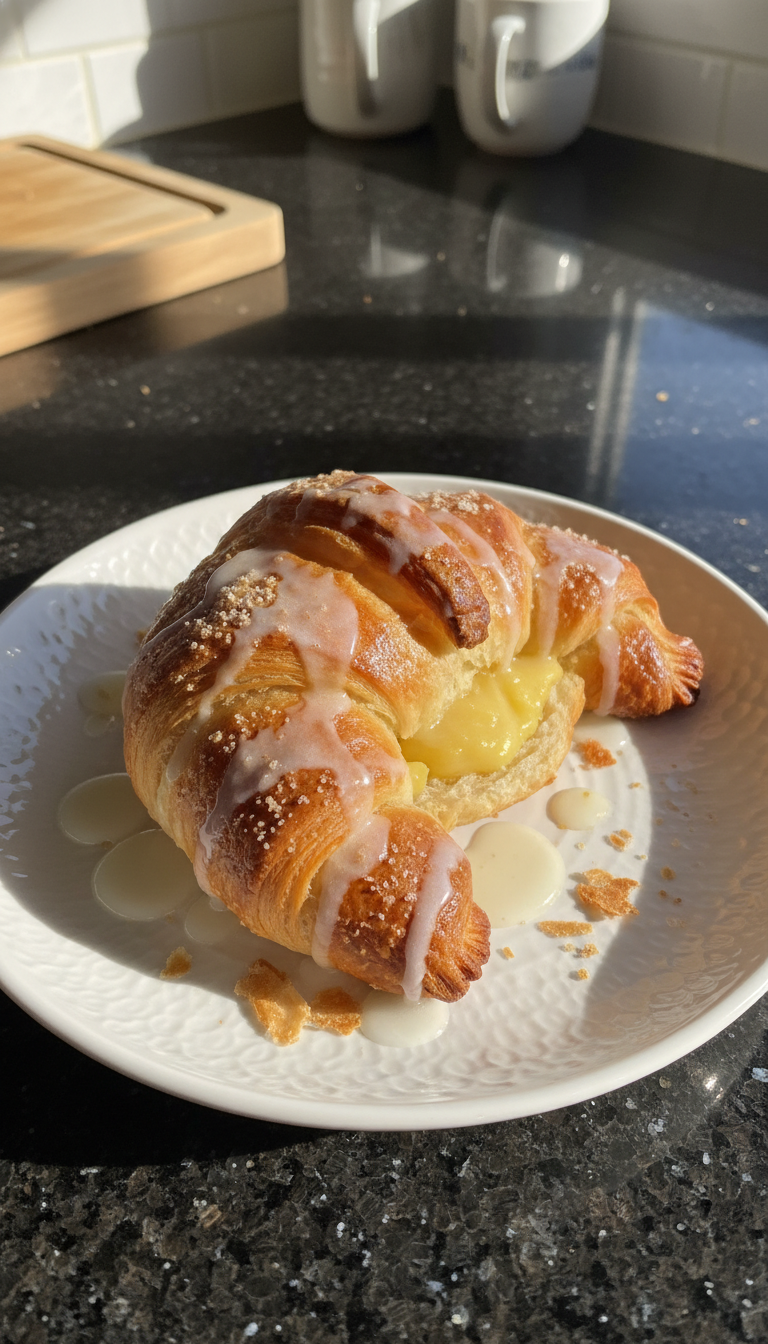
Fluffy Croissant with Lemon Cream
Created by: The Tomstastykitchen Team
Recipe Type: Heavenly Dessert Creations
Skill Level: Intermediate
Final Quantity: 12 servings
What You'll Need
For the Croissant Dough
- 500g all-purpose flour
- 10g salt
- 40g sugar
- 10g active dry yeast
- 300ml milk, warmed
- 250g unsalted butter, cold and in sheets
For the Lemon Cream
- 200ml heavy cream
- 100g sugar
- Juice and zest of 2 lemons
- 4 egg yolks
- 30g cornstarch
How-To Steps
In a bowl, combine flour, salt, sugar, and yeast. Gradually mix in warm milk until a shaggy dough forms. Knead until smooth, then shape into a ball and let it rise for about 45 minutes.
Roll the dough into a rectangle and place the cold butter in the center. Fold the dough over, encasing the butter, and roll out again. Repeat this process three times, chilling the dough between each fold.
Cut the laminated dough into triangles and roll them up from the base to the tip. Place on a baking sheet and let them proof for about 30 minutes.
Preheat the oven to 200°C (400°F). Bake the croissants for 20-25 minutes until golden brown. Allow to cool slightly.
In a saucepan, whisk together the cream, sugar, lemon juice, zest, egg yolks, and cornstarch. Cook over medium heat until thickened, then cool before using.
Slice croissants in half and fill with the lemon cream. Dust with powdered sugar if desired.
Extra Tips
- For best results, ensure your butter stays cold during the lamination process. This will help achieve that flaky texture we all love in croissants.
Nutritional Breakdown (Per Serving)
- Calories: 350 kcal
- Total Fat: 21g
- Saturated Fat: 13g
- Cholesterol: 95mg
- Sodium: 150mg
- Total Carbohydrates: 37g
- Dietary Fiber: 1g
- Sugars: 10g
- Protein: 7g